How does Automatic Vehicle Identification (AVI) operate?
This article covers how Automatic Vehicle Identification (AVI) operates.
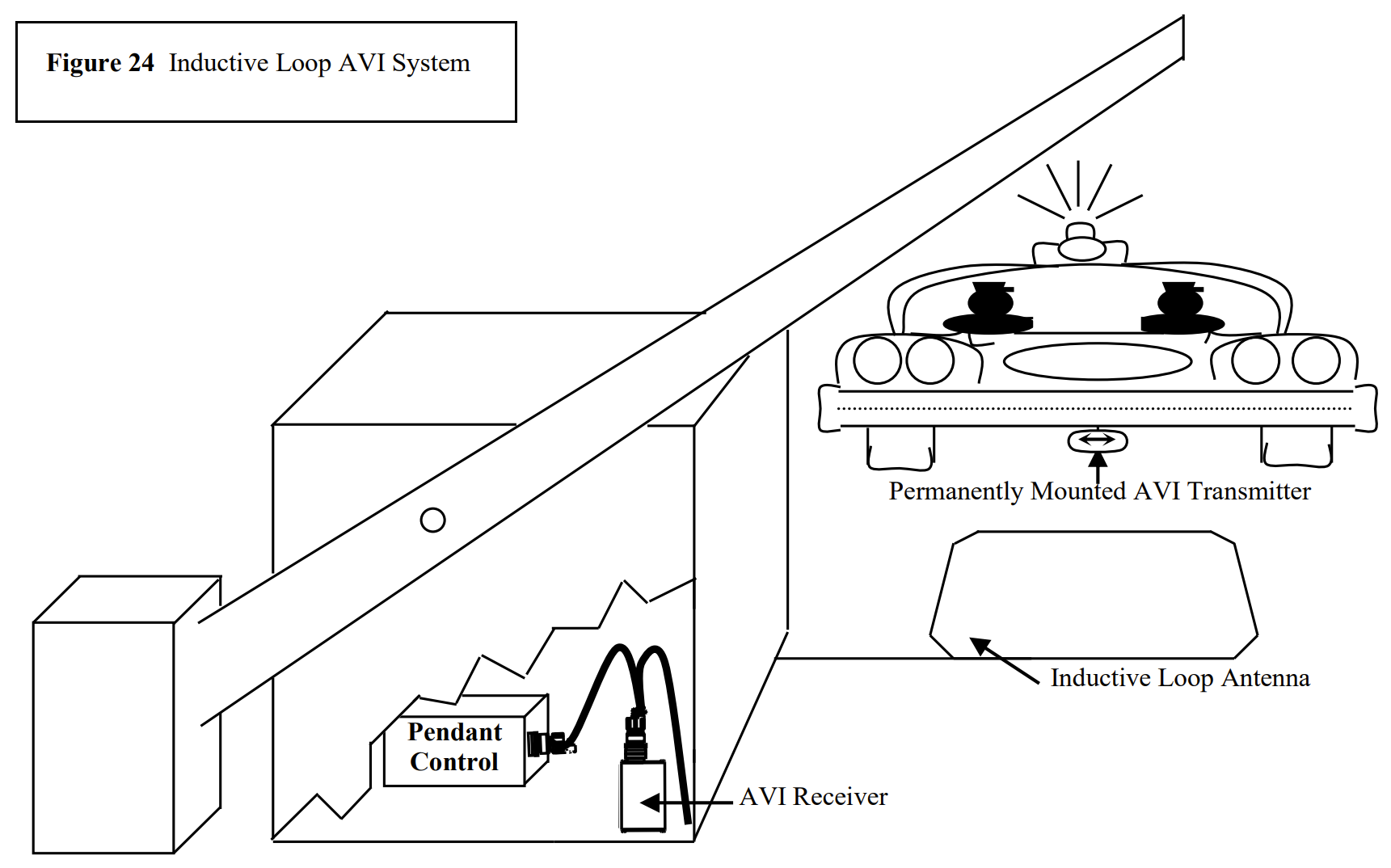
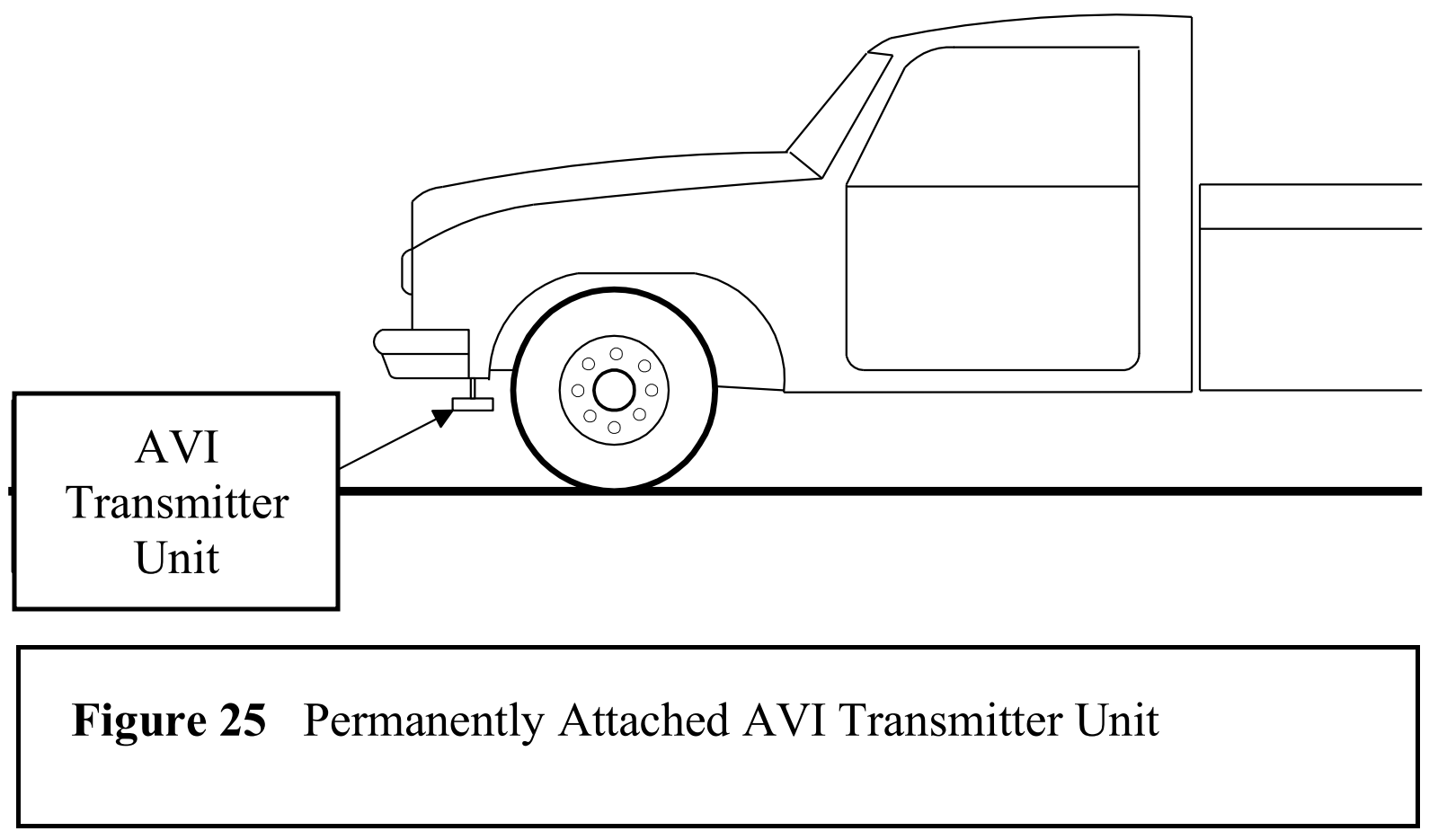
The AVI systems that operate on inductive loop technology consist of a transmitter attached permanently to a vehicle and a receiver connected to an inductive loop buried in the roadway. The buried AVI loop serves as an antenna for the signal of the transmitter. The inductive loop AVI system allows for accurate detection and identification of specific vehicles.
AVI systems have many uses: Gated communities, industrial complexes, and government agencies use them to allow emergency vehicles unrestricted access to secure areas—saving time, property, and lives. These systems provide a cost efficient way for companies to monitor their facilities, to administer automatic parking, and to limit access to secure areas. Public transportation
systems use AVI technology to allow buses to preempt traffic signals so that the buses can stay on schedule. Light rail use these systems on the front and the back of their trains—to turn signals on and, after the train passes, off. In these days of high security concerns, airports use AVI systems to monitor and control ground vehicles.
The inductive loop AVI systems are a simple, cost effective means of providing vehicle identification. The permanently attached transmitter can never be forgotten, misplaced, or lost. Ruggedly built transmitters are encapsulated in an epoxy-based resin that never requires maintenance. The receiver connects to a single loop, of one turn, that is similar in size to a conventional detector loop. If desired, the AVI loop can occupy the same slot as a detector loop. The short communication range between the transmitter and the detection loop practically eliminates false calls.
|
|
|
|